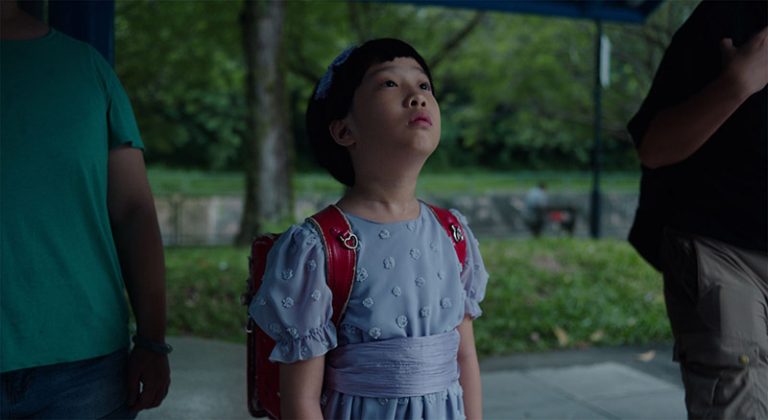

The origin of the word appetite comes from the Latin word “appetitus,” which translates directly to “desire.” Appetite was meant to capture not just physical hunger, but the notion of desire, longing and inclination.
Appetite exists in many forms. It speaks to pleasures both mental and physical: a satisfactory meal, the pursuit of power, or for pleasure in itself. But it extends beyond mere direction towards an object. To desire is the process that lies in the space between hunger and fullness, between reach and grasp. “A space must be maintained or desire ends,” so says Anne Carson in her lyrical essay Eros The Bittersweet, where she explores the complexities of desire. Desire can only be for what is lacking. I desire a peach, for I do not have it. Once I have it and am sated and full, my appetite for it ceases.
Having an appetite for something, then, is vital energy. To desire is a propellant to act, to move forward, often with deep and intense emotions, connecting us to our drive and purpose. As Crispin Sartwell says in Six Names of Beauty, “to desire is to feel intensely the life within yourself.”
Emotion, drive, motivation – these are all subjective and complex factors with no universally agreed upon definition. As desire and appetite are intrinsically intertwined, to talk about appetite, then, holds no simple map.
Here, I explore the notions of appetite with the following films within the Singapore Shorts ’24 programme to offer a window to broader issues and attitudes within culture and Singapore society.
1. Bread and butter: An exploration of societal appetites
When I first think about appetite, my mind drifts to food. Food is nourishing, and vital for survival. But it is also pleasurable. There is a sensuous joy that comes when we bite into a ripe peach, a well-cooked dish, a warm plate of noodles. This joy can also be communal. The pleasure one derives from flavours are often magnified when in good company, and a meal can be a celebration of fleeting moments and a reminder of the joys of community.
Epicurus, the Greek philosopher, was devoted to a life in pursuit of such pleasures. But he did not believe in an uncontrolled appetite. His school of philosophy, Epicureanism, emphasised the pursuit of happiness through the moderation of desires and the cultivation of simple pleasures. As such, he had three categories of appetite: the natural and necessary, such as food and shelter, the natural and non-necessary, such as luxury fine dining, and finally, the vain and empty. The last is incubated by society and false beliefs of what we need, such as the pursuit of power, wealth, fame.
To be a person in society means that we may fall into its machinations, its appetites and its moods. The following films are an exploration of what happens when our appetites are guided by the belly of the beast – within societies, such as Singapore, itself.
The natural and necessary
I was having dinner at my grandmother’s place one evening when my interest was piqued by a local cooking show playing in the background. There was a lot of raw flesh being cut, and people on screen freaking out at the sight. The premise of the show was simple enough. Like most programmes of the genre, the chefs were competing over who could concoct the best tasting food. But this episode’s focus was on frogs, and the talk show host repeatedly emphasised to the chefs that they had a mental barrier to overcome as many of the participants were repeatedly squeamish about frogs (“ I think frogs are too cute to eat!,” said one). What ensued was the chopping, mashing, coating, and frying of frogs in various forms. The chefs worked hard at concealment — hiding the form of the frog through various methods, modifying the taste with a variety of strong seasonings. As they cooked, the host would comment, “yes, you can’t tell that it is a frog,” and “this looks just like a chicken drumstick.” Eventually, the chefs were judged on not just how well the dish tasted, but how well their frog dishes were able to seem like something else entirely. Isn’t a frog still a frog, even after being mashed up?
 Dinner at the Yu household, contemplating the four tilapia dishes for Grandma’s birthday. Image still from Eating Fish (2023, Ooi Mae Hweei, Wai Zi Ying)
To speak of food is to speak of everything. When presented with food, what has been concealed in its journey to the table? Eating Fish addresses this through the origins of fish and the social politics of its production. As consumers today, we are often far removed from the food supply chain. Here, the main character, boy, has to literally slip on water at the beginning of the film, which was found to be ice melted from transporting tilapia, symbolically linking him to the tilapia’s long journey. As we dig deeper, we see how the food supply chain can oftentimes be extractive and exploitive: the coral triangle, once the world’s richest marine biodiversity hotspot, is dying due to ocean acidification (from carbon dioxide gas released into the ocean), plastic pollution and overfishing.
Our economic system’s appetite for constant demand can hurt the communities, ecosystems and environment that we cannot see. The coral triangle supports the livelihoods of over 120 million people worldwide and provides food to its local coastal communities. But as overfishing and destructive fishing methods continue to devastate the marine populations, it endangers marine life, with fish stocks depleted beyond levels from which they can never recover, and threatens local livelihoods who are most vulnerable to climate change. Surrounded by abundance, who pays the price for our indulgence?
The natural and non necessary
Before food reaches the table, it starts in the kitchen, through the act of cooking. To cook is to witness an alchemy of ingredients. From the sound of simmering vegetables on the pan, the aroma of added spices, and the careful tending to onions on the pan as it caramelizes, cooking can very much be about reconnecting oneself with sensation, and by extension, pleasure.
The pleasures of cooking are stripped in the man obsessed with the perfect egg, where we observe a man cook eggs in various forms to achieve perfection. The steps are laborious, meticulous, clinical (there is an image of him separating raw yolk from white with his blue rubber gloves) and one does not feel entirely convinced by the end of the film, the joy he experiences upon finally achieving his goal of creating the perfect egg.
 Various tools used to bend the eggs at will, in the man obsessed with the perfect egg. Image still from the man obsessed with the perfect egg (2023, Caganap Janna)
The film echoes the history of gourmandise and its history of positing utopia. But the pursuit of utopia/beauty/perfection is based on exclusion — to be A, you cannot be B,C, or D. In the face of the constant pursuit of perfection, what has to be lost? As we sit in our air conditioned homes, migrant labourers face the brunt of climate change’s extreme heat spells. In an effort to maintain traditional family structures, queer relationships remain legally unrecognised. Can this really be utopia if true freedom is compromised?
The vain and empty
What does food mean to us? In The Bun, we see how the significance of food is often intertwined with other desires, such as power and money. With absurdist humour, we witness two men — one in corporate wear, the other plainly clothed — fight it out over a bun.
The film is a parable on what happens when appetite is left unchecked in contemporary society. These are “tyrannical” men, as Plato would coin, who indulge in “unnecessary pleasures and appetite”. In a workforce that is hungry to prioritise profit and power above all else, and in Asia, with “one of the most competitive and overworked places on the planet,” workers may fall into base desires and primal conflicts that ultimately end in violence.
 The struggle reaches its climax in The Bun. Image still from The Bun (2023, Jordan Low)
2. Of wolves and crocodiles: the metaphorical bodies of the consumer
After a particularly trying period at work, I find myself leaving the confines of gray office walls for the resplendent greenery of a wellness retreat. The retreat, hosted by a swanky beach resort, comes with treatments and wellness activities (guided breathwork, morning yoga) that promise to “activate my creative energy,” and a menu that encourages me to eat light to “feel bright.” My mini bar comes with items such as “healthy cookies” and detox water (simply, water infused with lemon). The retreat states on its website, that through upgrading my diet, I will find myself returning home refreshed and renewed.
Such spiels are not entirely unfamiliar to me. Growing up, I would read glossies marketing items that promised to improve my life in some way, and into adulthood, sat from the other end of the page to write these narratives as well. It is a rampant form of marketing, that buying into something whispers promises of changing yourself for the better. We may not need that latest beauty device, but perhaps it can change something about ourselves, hide our imperfections, or even signal how well we are doing.
We are all consumers, and under today’s consumer capitalism, the need for material goods is very much about fostering desire rather than needs. Never have we felt so free with an overabundance of choice, but really, we are never so psychologically and intrinsically linked to the logics of the market than ever before. Jia Tolentino sees how women are especially suckers for self-optimisation: when we constantly seek to optimise ourselves, pleasures always remain out of reach. In perpetual hunger over what to consume next, we remain subjects to the logics of the market, getting into the next thing the market (and advertising/marketing) dictates. Today, it’s pilates. Tomorrow, what’s next?
Philosopher and cultural theorist Byung-Chul Han coins this “perpetual self-optimisation”, where one relentlessly pursues self-improvement and personal enhancement that is so deeply ingrained in contemporary society. To constantly optimise to remain competitive and productive can entail fanatical traits. Self-optimisation can make monsters of us all. One only needs to look at American Pyscho, the archetypal finbro and self-optimising king, to see where his unchecked appetite for affluence and social status gets him.
 Humidity reeks through the screen in Chomp It!. Image still from Chomp It! (2023, dir. Mark Chua and Lam Li Shuen)
In Chomp It!, we see this allegory play out. We observe men transform into crocodile-zombies, as representations of ‘mindless’ consumers with insurmountable appetites. The film reflects on life under the microscopic lens of Singapore, which, the film description states, was founded on social hierarchy and privilege. We enter a world of violence and ugliness: military tanks, raw chunks of meat, the careless prodding into a lifeless, raw heart, men transforming into crocodile-zombies. The film oozes with raw flesh and sweat that invokes discomfort, even repulsion. It is a raw depiction of power, with cannibalistic monsters sitting atop high social ranks. At the end of the film, we see one of the creatures literally biting the hand that feeds him. Parallels to The Bun can be seen in the way these characters lack self agency, giving in only to their base appetites. In their appetite for power, only violence remains.
But in a world of violence, there are possibilities for kindness. If the films preceding were parables, M.U.R.B.Y sits firmly in the fairytale territory. This is a fairytale that recognises the chaos of our universe and its imperfections, but offers the chance that it might be possible to do something good with it. Charmingly animated, the film starts with an advertisement for dogs; M.U.R.B.Y (Most Ultra Rare Bird Yet) feathers which can turn dogs into beautiful wolves by ingesting it. In response to the ad, we follow Rob, a lonesome dog, so fierce in his desire to become the most magnificent wolf, steals a bag of rare feathers, only to end up losing it, leading to his journey through the trials and tribulations of the swamp. He survives only with the help of M.U.R.B.Y, befriending the bird itself, who willingly gives him his feather at the end of the film.
 Rob the dog about to transform into a big bad wolf in M.U.R.B.Y (2023, dir. Jonyl Tan and Arcilla Meghan Setyabudi)
Rob’s appetite for the market dictated feathers and want for power is subverted as he discovers companionship instead. The dog does not join the ranks of the other wolves and retains his original form, and instead grows through kindness. Here, love is the active, illuminating source that enlightens and transforms. As Francesca Martinez said, “In a world that constantly reminds us of our lack, accepting ourselves as who we are is an act of political resistance.”
Back at the resort, despite all its promises to “feel bright,” I found my lunch at the restaurant overlooking their pool to be bland and overpriced. I left the resort in search of other food.
3. Hunger and excess: appetite as explosive
“That was the thing with hunger: it opened up something dangerous in you, something endless, like a universe, or a cliff.” — Lorrie Moore, “Starving Again.”
Strong emotions, as one can know intimately, can threaten to consume. To experience grief can feel bottomless, like a pool one sinks in, with no grounding or footing. In Voicemails, a mother grapples with the loss of her son. In the vagaries of loss, the film shows only the spaces left behind, with scenes of the telephone and of his empty apartment, her disembodied voice echoing in space. Her grief, along with her son in his disappearance, has expanded and enlarged, outside of their bodies to a place too big to see.
In exposure therapy, we are taught that aggressively leaning into something that scares or triggers us can be the very antidote that cures us. In the face of grief, the mother soon finds ways to incorporate her loss in her everyday life, transitioning from panic-induced calling to a more neutral state, saying “I will allow myself to let all my emotions out” in order to heal.
 A disembodied voice echoing throughout an empty space in Voicemails (2023, dir. Hoe Jian Wei)
One of the most common nightmares are related to teeth: breaking, falling, rotting. There are several interpretations as to why this is so, but the common consensus is that it relates to some form of psychological distress. Is it not strange that in periods of emotional overwhelm, our subconscious turns to teeth, the very body part that plays an active role in digestion? Our teeth help to cut and crush food, making it easier for us to consume them through swallowing and digestion. When we feel ourselves out of control, we fear these tools are not there to support us.
In the animation Acid Green, horror mimics the irrevocability of grief. The film is laden with surreal images of teeth, resembling a nightmare: the dog’s teeth bared and gnashing, the protagonist getting bitten, attempts at control through brushing, interspersed with more biting. Tension escalates with vigorous brushing, culminating in the dog’s teeth falling out. Then, the protagonist collapses to their knees, runs, and transforms into a bus. Amidst scenes of tension and shifting forms that oscillate between 2D and 3D, the climax offers a sense of liberation. The bus drives on, freed from the tensions that marred most of the film before.
 Brushing the teeth of the dog in Acid Green (2023, dir. Yuan Li Elizabeth Xu (EXYL))
If appetite is desire, desire would imply a lack. I desire something, because I do not have it. But as anyone knows, when you lack something for too long — food, pleasure, nourishment, love — you start to starve.
When the body starves, it first undergoes catabolism, aka destructive metabolism, and begins to slow down, tuning down its metabolism and hormones. Then, it will start to eat itself. Fat decreases and protein wastes. In order to sustain its vital organs, the body will take protein from the blood, and when that is done, the muscle and skin. The skin loses protein, becoming dry and thin. Body temperature soon drops. Finally, menstruation stops. Reproduction is secondary to the body that must now focus on survival. This can last from a few months to weeks, before it proves fatal. Unaddressed, the body ultimately wastes away, expiring. What parts of ourselves do we eat away, finally leaving to waste, when we deny our hunger?
It is culturally ingrained upon women to reduce their appetites to fit society’s ideals. (As Charli XCX crooned in her song Rewind “…honestly, I’m always thinking ’bout my weight”). Whether it is portion control over meals, or minimising one’s voice in not asking for more, we are often taught to occupy as little space as possible, for a starvation that is both physical and psychological.
 The woman approaching the peaks of pleasure in She and Her Good Vibrations (2023, dir. Olivia Griselda and Sarah Cheok)
When one suppresses their appetite for too long, their hunger threatens to explode. She and Her Good Vibrations is a reclamation of one’s appetite, in the face of a reality that denies one any semblance of pleasure. Its protagonist leads a lonely and alienating life (the film opens with her sitting in a dark room, over a zoom call, where men constantly talk over her, their faces ugly and contorted), until she finds joy in a vibrator. They start a relationship that is frenetic, libidinal, uninhibited. She sings from her window, naked, to the confusion of her neighbour. Her fantasies see her starring in a Korean MV, with her vibrator as a romantic lead. She uses it so much that it short circuits, where she then holds a funeral for it.
To reveal and revel in an appetite, especially one that is sexual in nature, can make you particularly vulnerable. The protagonist starts to break from the confines of her life, indulging in her pleasure that is pure, raw and untamed, and ultimately truthful to herself.
Is this excessiveness, this indulgence, ultimately joyful? I say yes. In the face of a world that restricts and denies us so much pleasure, to indulge in pleasure is a radical reclamation of one’s appetite.
Our appetites propel us forward and make us feel violently alive.
About the Writer

Kimberly Ong is a writer from Singapore. Her interests lie in exploring the complexities of gender and feminine identity — particularly, but not limited to, modes of consumption and culture. She presently writes copy for brands and has worked in fashion and beauty with bylines in Harper’s Bazaar SG and L’Officiel, among others. She can be reached at kimberlyongzq@gmail.com
The opinions expressed in this article are the author’s own and do not reflect the view of the Asian Film Archive.


