
November 2026
This November, explore the many histories and possibilities of cinema with Asian Cinema Digest, from rediscovering forgotten films to celebrating analogue filmmaking and martial arts classics.
Discover restored films at ICA London’s Lost, Banned, Reclaimed, celebrate the beauty of celluloid in Mumbai at the 16mm Film Festival, explore Hong Kong martial arts cinema at Rialto De Pijp in Amsterdam, and catch experimental moving-image works at Tokyo’s Liminal Archive: Doc/Ex Film Festival.
Listen to Asian Cinema Film Club discuss Kiyoshi Kurosawa’s Charisma (1999), and for those who just watched Possible Love (2026), delve deeper by reading more about South Korean filmmaker Lee Chang-dong’s cinema. Additionally, explore the exchanges between Hong Kong and Thai action films, Pakistani-Canadian filmmaker Sharmeen Obaid-Chinoy’s socially engaged filmmaking and the reinterpretation of Philippine folklore in independent cinema.
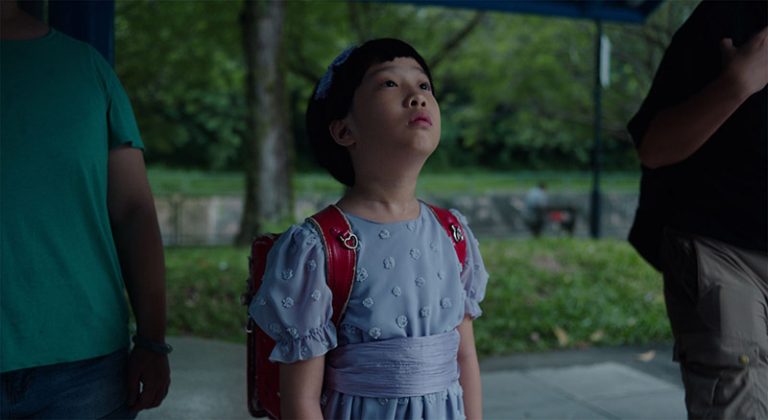
 Image still from The Colour of Pomegranates (1969, Sergei Parajanov)
From 19 November to 12 December, ICA London’s Lost, Banned, Reclaimed presents four films from Iran, Armenia, Egypt and Kazakhstan that were once lost, forgotten or suppressed, before eventually being restored and rediscovered by international audiences. The programme explores how suppression and limited circulation have shaped film history, while highlighting the role of restoration and film programming as acts of film and cultural preservation.
The selection includes Mohammad Reza Aslani’s Chess of the Wind (1976), Sergei Parajanov’s The Colour of Pomegranates (1969), Shadi Abdel Salam’s The Night of Counting the Years (1969) and Ardak Amirkulov’s The Fall of Otrar (1991). Spanning different historical periods and cinematic traditions, the programme offers distinctive approaches to storytelling and visual languages, inviting audiences to reconsider the films and filmmakers that have been overlooked in conventional histories of cinema.
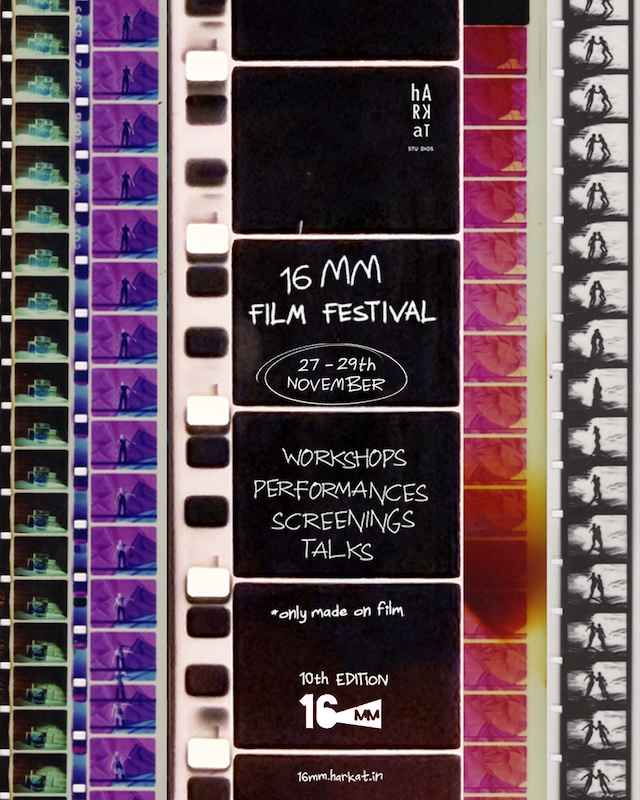
Returning for its 10th edition, the 16mm Film Festival, organised by Mumbai-based film lab Harkat, brings together programmes that celebrate filmmaking rooted in photochemical processes and the continued possibilities of celluloid.
Taking place from 27 to 29 November at Versova, Mumbai, the festival presents a series of short film screening programmes and live film performances. Highlights include Bernd Lützeler’s 3D film performance Revue!!, Alex Schuurbiers’s Silence, Song and expanded cinema performances such as Karan Suri Talwar and Iti Agarwal’s Small Subtractions and Keyuri Bhogale’s Asava Sundar. The programme also features Ek Film Anek Film, a showcase of one-minute films from Harkat’s residency and its lab.

From 4 December, Amsterdam’s Rialto De Pijp presents Rumble in Hong Kong with the Shaw Brothers, a retrospective celebrating the legacy of the influential Hong Kong film studio and its contributions to martial arts cinema. From wuxia tales of heroism and morality to elaborate fight choreography sequences and fantastical sets and costumes, the programme revisits the cinematic traditions that defined the studio’s golden era.
Eight classic films from Shaw Brothers are in the lineup, including King Hu’s Come Drink with Me (1966), Cheng Chang-ho’s King Boxer (1972), Ho Meng-hua’s The Black Tavern (1972) and Chor Yuen’s Intimate Confessions of a Chinese Courtesan (1972). Other highlights include Lau Kar-leung’s The 36th Chamber of Shaolin (1978) and The Eight Diagram Pole Fighter (1984), alongside Chang Cheh’s The Five Venoms (1978) and Kuei Chih-hung’s Killer Constable (1980).
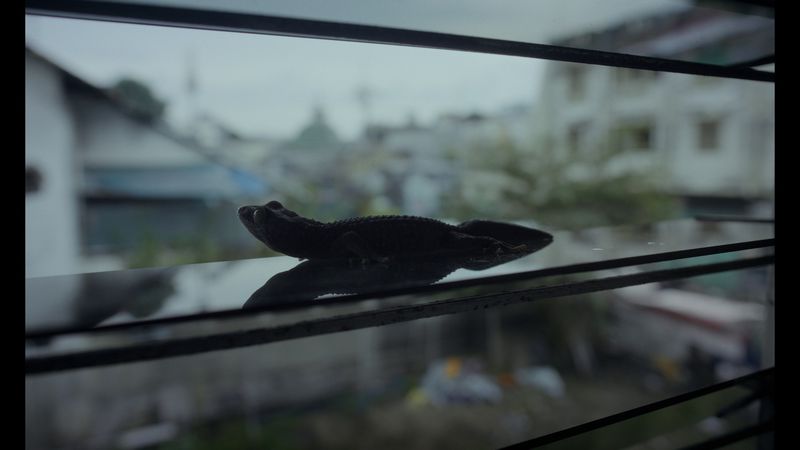
Tokyo-based Liminal Archive: Doc/Ex Film Festival returns with its 2026 edition, bringing together documentary, experimental cinema and moving-image works that blur the boundaries between different forms of filmmaking. Exploring themes of memory, perception, the body, landscape and politics, the festival presents 37 films from across Asia, Europe and the Americas.
From 9 to 13 December, Tatiana Fuentes Sadowski’s The Memory of Butterflies (2025), which explores the colonial history of the Peruvian Amazon through archival materials, and Zuza Banasińska’s Grandmamauntsistercat (2024), which reworks archival footage from communist-era Poland to examine family, gender and ideology, are featured. Cedric Arnold’s This Light Is Not Ours (2025), documenting the tradition of screening films as offerings to spirits at Taoist shrines in Bangkok, and Indonesian filmmaker Owen Effendi’s short film Gecko (2025), which explores the Chinese Indonesian experience through a young Chinese woman uncovering her grandfather’s past in Indonesia, are some of the highlights.
 Image still from Charisma (1999, Kiyoshi Kurosawa)
Hosts Elwood and Stephen of Asian Cinema Film Club discuss Kiyoshi Kurosawa’s lesser-known 1999 film Charisma, a philosophical thriller starring Kōji Yakusho as a detective who retreats into a forest following a failed hostage negotiation, only to become embroiled in a conflict over a mysterious tree that appears to be poisoning its surroundings.
Having previously discussed Kurosawa’s Cure (1997), the duo compare the two films, exploring Charisma’s dreamlike narrative, as well as the film’s ambiguous characters and distinctive visual compositions. They consider the film’s possible ecological and social allegories, while questioning whether its slow pacing, sparse soundtrack and surreal imagery ultimately serve its narrative. They reflect on the importance of making lesser-known works in Kurosawa’s filmography accessible to contemporary audiences, particularly following its recent home-video release alongside Cloud (2024).
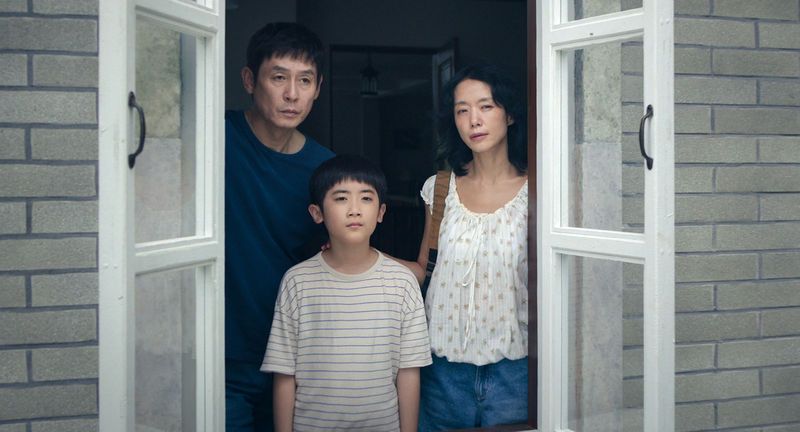 Image still from Possible Love (2026, Lee Chang-dong)
Writer-researcher Phoebe Chen discusses South Korean filmmaker Lee Chang-dong’s latest feature, Possible Love (2026), and its explorations of class inequality and how we perceive the world around us.
Looking at Lee’s adoption of the documentary style, as well as his use of flashbacks and surveillance imagery, Chen considers how the film draws attention to people and experiences that often go unnoticed. She examines the ethical questions surrounding the representation of working-class people and their lives, particularly in how Lee reflects on his own responsibilities as a filmmaker depicting the suffering of others. Drawing connections to his earlier works, including Poetry (2010), Chen considers how Lee’s cinema can make visible the social realities that are often overlooked in everyday life.
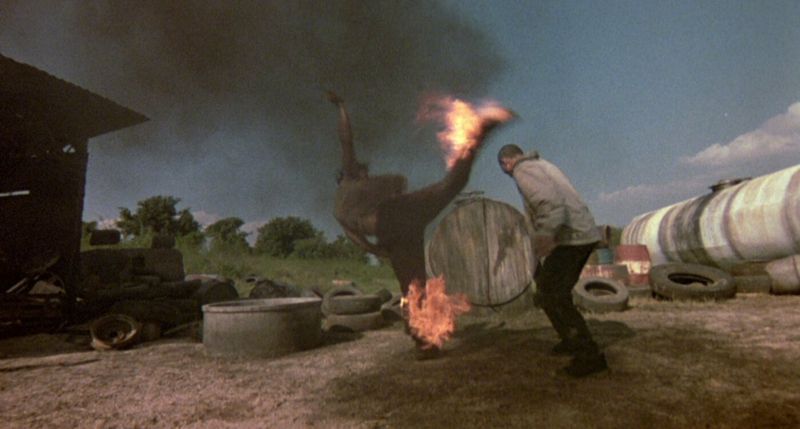 Image still from Ong-Bak (2003, Prachya Pinkaew)
Initially published for HKinema, this translated essay by Jonah Jeng traces the rise of Thai martial arts cinema and its relationship with Hong Kong action films, surveying how the two industries have influenced one another since the 1970s.
Looking at films such as Prachya Pinkaew’s Ong-Bak (2003) and The Protector (2005), as well as Panna Rittikrai’s Born to Fight (2004), Jeng traces the influence of Hong Kong action cinema on Thai filmmakers, from Shaw Brothers and Golden Harvest productions of the 70s to the development of a distinctive Thai action style characterised by Muay Thai. He explores how these films negotiate ideas of Thai national identity within an international cinema landscape, and how this cinematic exchange has also been reciprocated, with Thai action star Tony Jaa appearing in Hong Kong and Chinese productions such as SPL II: A Time for Consequences (2015) and Master Z: Ip Man Legacy (2018).
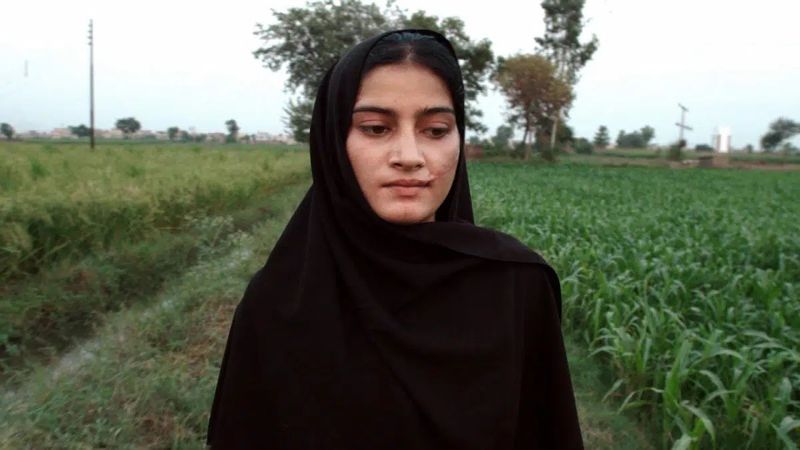 Image still from A Girl in the River: The Price of Forgiveness (2015, Sharmeen Obaid-Chinoy)
Pakistani-Canadian filmmaker Sharmeen Obaid-Chinoy speaks with Fatima Khan about her journey from a self-taught documentary filmmaker to a director of major television productions, and her belief in cinema as a tool for change.
Reflecting on her early documentary work in the Philippines and Syria, Obaid-Chinoy discusses how filmmaking can raise awareness of issues affecting marginalised communities and how films can influence public policy. She draws particularly on her own experiences with her Academy Award-winning documentary A Girl in the River: The Price of Forgiveness (2015), which brought about changes to Pakistan’s honour killing legislation. She shares her approach to depicting the 1947 Partition of the Indian subcontinent in the television series Ms. Marvel (2022), emphasising the importance of representing personal and collective histories for audiences across generations.
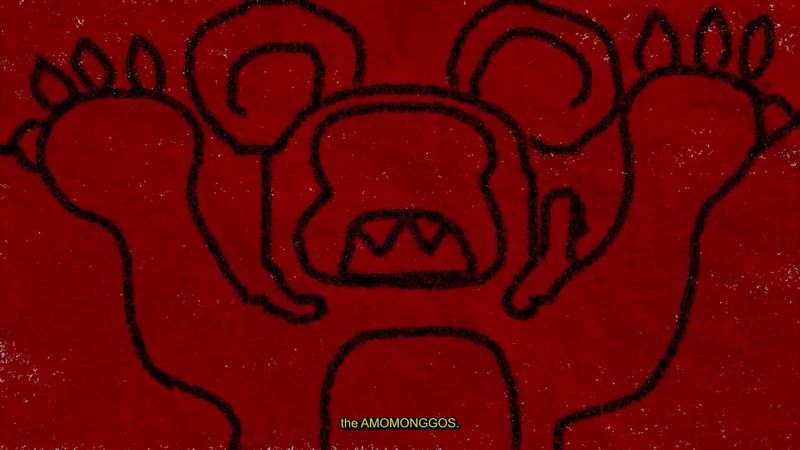
Writer Christ Dustly Go Tan probes into the relationship between Philippine folklore and cinema, examining how Filipino independent filmmakers reinterpret traditional mythological creatures to reflect contemporary sociopolitical realities. With the recent release of DreamWorks Animation’s latest animated film Forgotten Island (2026), Tan challenges the tendency to celebrate Filipino culture only when it receives international recognition by drawing attention to local filmmakers whose works engage with the country’s diverse regional histories.
Looking at films such as Alyx Ayn Arumpac’s Aswang (2019), Vinjo Entuna’s Ang Amomonggo sa Aton (2021) and Gabriela Serrano’s Dikit (2021), Tan explores how Philippine folkloric creatures serve as allegories for state violence and social prejudice. Tan contemplates how mythical figures such as the Bakunawa and Tikbalang are reimagined to address political power, environmental struggles and queer identities, revealing folklore’s endless potential as a means of cultural reclamation and social critique.
Applications are open for Queer East Festival 2027’s Guest Curatorial Programme, inviting curators, programmers and creatives from around the world to propose original screening events exploring queerness in East and Southeast Asia, their diasporas and beyond. Queer East is looking for proposals that include a film screening event with an additional live element, such as performances, panel discussions, Q&As, workshops and more. Selected proposals will be presented at the festival in London from April to May 2027. The application guidelines can be found here, and the submission deadline is 29 November 2026.
Bangkok-based Purin Film Fund has championed independent filmmaking across Southeast Asia since 2017. Applications are open for the Winter 2027 cycle of its Film Activities Fund, which offers grants up to USD 5,000 to support projects that spotlight Southeast Asian cinema and strengthen local and regional film communities through screenings, distribution efforts, and educational initiatives. The application guidelines can be found here, and the submission deadline is 1 December 2026.
Organised by the Niigata International Animation Film Festival (NIAFF), the fifth Niigata Animation Camp invites emerging directors, animation creators, and students residing in Japan, East Asia and Southeast Asia to participate in its talent development programme. Taking place in March 2027, the programme offers two courses: the Animation Production Workshop Course, which focuses on short-term production and intensive mentoring for animators, and the NIAFF Networking Course, which offers opportunities to attend masterclasses, festival programmes and networking events. The application guidelines can be found here, and the submission deadline is 14 December 2026.
Submissions are open for the fifth edition of MINT Chinese Film Festival (MINT CFF), a women-organised film festival celebrating independent Chinese and Asian cinema. Taking place from 12 to 14 March 2027 at Edinburgh Filmhouse in Scotland, the festival welcomes works by Chinese and Asian filmmakers, as well as diasporic and international filmmakers exploring Asian cinema. The application guidelines can be found here, and the submission deadline is 15 December 2026.
The Internet Archive invites filmmakers, artists, and creatives of all backgrounds to participate in its 2027 Public Domain Film Contest, celebrating the creative possibilities of reimagining works entering the public domain. Applicants are invited to create a short film of no more than four minutes using at least one work published in 1931 that enters the US public domain on 1 January 2027, including films, literature, music and artworks. The application guidelines can be found here, and the submission deadline is 7 January 2027.
This edition of the Asian Cinema Digest was compiled by Phyllis Chan. The Asian Cinema Digest is a monthly compilation of content taking place internationally involving Asian cinema and the moving image. Featured programmes are not representative of AFA’s views and are unaffiliated to the AFA unless otherwise stated.