
October 2026
This October, broaden your cinematic horizons with Asian Cinema Digest, from discovering new films and experimental moving-image works to revisiting beloved classics.
Gear up for Singapore Film Week as it debuts with festivals presented by Objectifs and the Singapore International Film Festival, while Singapore Art Museum and Film Nerve’s YAM AT SAM explores the possibilities of analogue filmmaking with Indonesian collective Lab Laba Laba. Discover new perspectives on moving-image art at the Busan International Video Art Festival and revisit Taiwanese cinema through The Garden Cinema’s Made in Taiwan programme.
Listen to Hong Kong filmmaker Stanley Kwan reflect on his four-decade career, or join Cinema Rex for a look at the beloved Iranian character Samad and the society that produced him.
Read about the filmmakers and histories that have shaped cinema in different corners of the world. Trace the evolution of Hong Kong New Wave cinema, explore Artavazd Peleshyan’s distinctive approach to montage and follow the journey of Angh (2026), a film from Nagaland making its way towards the global stage.
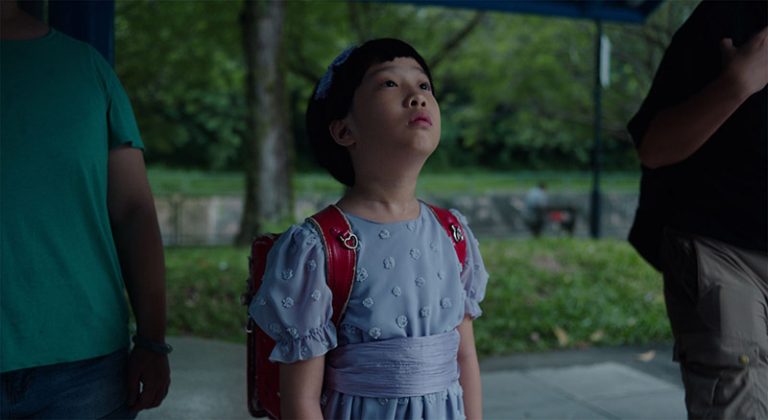
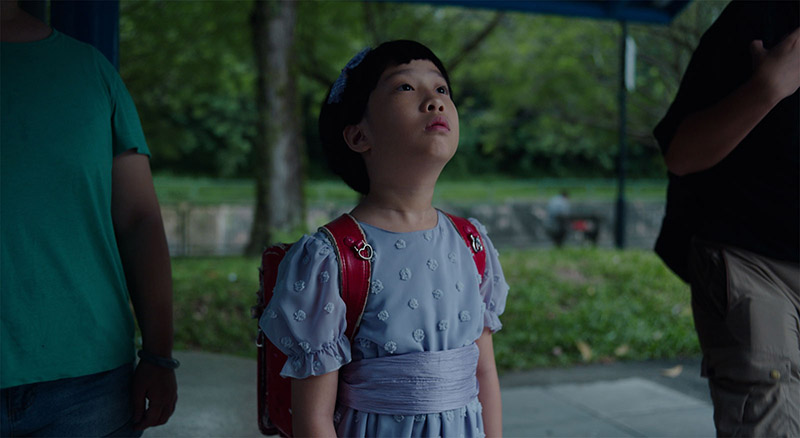 Image still from Ah Girl (2026, Ang Geck Geck)
From 22 to 31 October, the inaugural Singapore Film Week, a collaboration between Objectifs, the Singapore International Film Festival (SGIFF) and *SCAPE, bring screenings, dialogue sessions and industry programmes to audiences.
The inaugural Objectifs Short Film Festival celebrates the possibilities of short films under the theme “Normal is an Illusion”. Highlights include Image & Memory: Early works of Hirokazu Kore-eda, which revisits the Japanese filmmaker’s early career, and FreshTake!, which showcases short films by Singapore’s next generation of filmmakers.
SGIFF returns for its 37th edition with over 100 films, including the long-awaited Singapore premieres of Ang Geck Geck’s Ah Girl (2026) and Nelson Yeo’s The House on the Moon (2026). Co-presented with the Asian Film Archive, Landmark showcases seven restored international classics, including Jacob Cheung’s Cageman (1992) and Lino Brocka’s Macho Dancer (1988). Other sections to look out for include Singapore Panorama, presenting 16 local shorts, and Undercurrent, featuring experimental moving-image works and performances, such as Elysa Wendi and Liao Jiekai’s world-premiering On Memories of Countless Days Away (2026) and Hsu Che-Yu and Chen Wan-Yin’s lecture performance Corporeal Forms: Four Stories (2026).
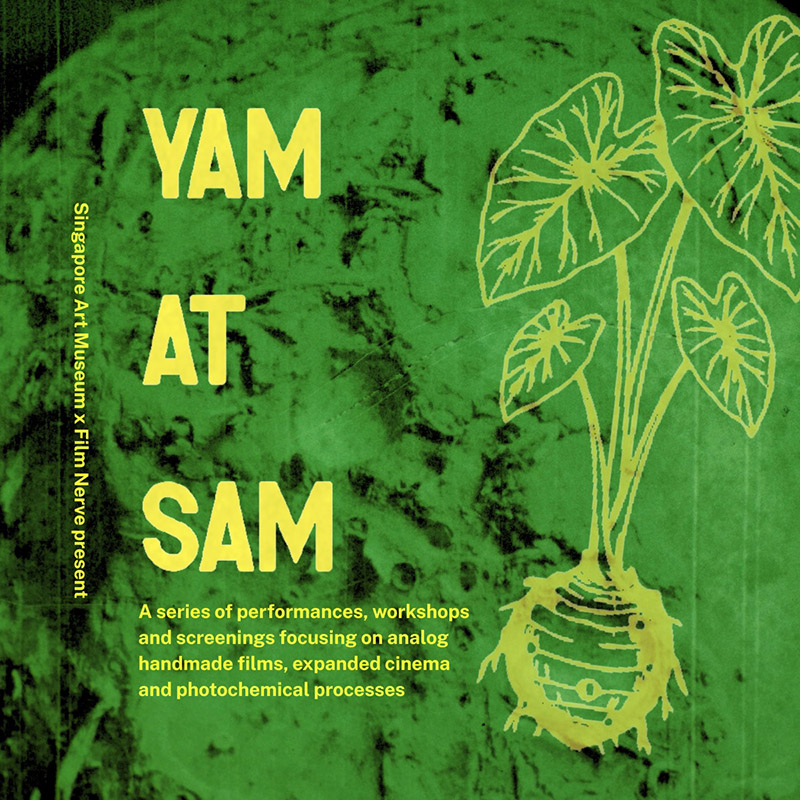
Presented by Singapore Art Museum in collaboration with Singapore-based artist-run film lab Film Nerve, YAM AT SAM brings together Indonesian film collective Lab Laba Laba for a weekend exploring the possibilities of analogue filmmaking, from expanded cinema performances and a hands-on workshop to experimental film screenings.
On 23 October, Indonesian experimental filmmaker Aditya H. Martodiharjo presents On Following and Breaking Instruction, exploring how film performances can be recreated and reinterpreted through instructions. Featuring works by Guy Sherwin and Malcolm Le Grice, the programme also includes a collaborative performance with artist Rizki Lazuardi and Film Nerve’s Mark Chua and Lam Li Shuen. On 24 October, Lab Laba Laba leads an introductory 16mm workshop, taking participants through the analogue filmmaking process, from shooting and hand-processing to editing and projection.
Later that evening, Orh Nee Screening Nights: Lab Laba Laba (Indonesia), curated by Rizki Lazuardi, brings together independent works and contemporary experiments with celluloid. The screening will be followed by a discussion with Lazuardi and Asian Film Archive’s Senior Archivist Chew Tee Pao, moderated by freelance film programmer Warren Sin.
Find out more about the YAM AT SAM programme here.
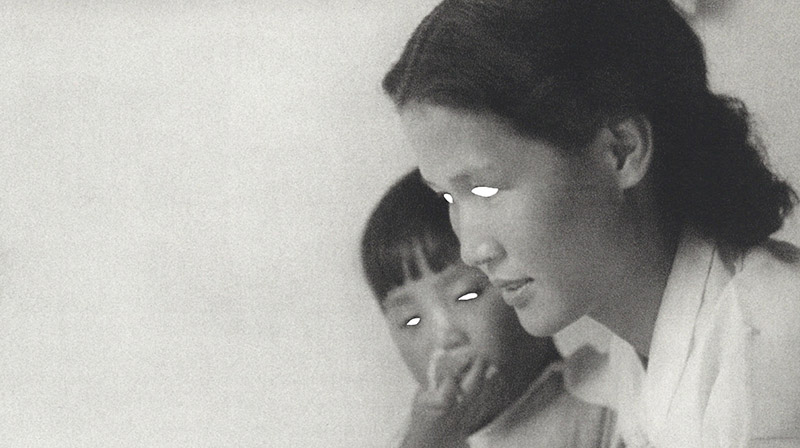 Image still from If I Had Four Mothers (2025, Mirae kh Rhee)
The Busan International Video Art Festival (BIVAF) returns for its 20th edition, presenting a series of programmes exploring the possibilities of video art and the changing ways we perceive the world. Running till 25 October, the festival brings together moving-image works that question how images shape our understanding of contemporary realities.
From 10 to 18 October, this year’s Selection section, titled It (Always) Breaks Down First on the Side That Watches, has 11 works from the International Competition, the Korean Competition, and Video Art Busan across five programmes, examining how images and systems of classification shape and complicate the ways we perceive the world.
From 19 to 25 October, the Thematic programme Routes of the Root, curated by Yul Cho, features works by Mirae kh Rhee, Skye Jin, Sara Sejin Chang (Sara van der Heide) and Uma Feed. Taking experiences of transnational adoption from South Korea as its starting point, the programme considers questions of origins and belonging, exploring the stories through which personal and cultural identities are constructed.
Find out more here.
 Image still from Flowers of Shanghai (1998, Hou Hsiao-hsien)
Running from 24 October to 6 December 2026, London’s The Garden Cinema returns with its fourth edition of Made in Taiwan, its annual programme celebrating Taiwanese cinema through a selection of classic and contemporary films. This year’s programme places a special focus on cinematographer Mark Lee Ping-bing, who will also be in attendance for screenings of Hou Hsiao-hsien’s Flowers of Shanghai (1998) and The Assassin (2015), alongside the UK premiere of Yang Li-Kuo’s newly restored The Dull Ice Flower (1989).
Other highlights include Wang Toon’s Modern Taiwan trilogy, comprising Strawman (1987), Banana Paradise (1989) and Hill of No Return (1992), as well as Huang Ya-li’s documentary Le Moulin (2015), which revisits Taiwan’s surrealist poetry movement during the Japanese colonial period.
Find out more here.
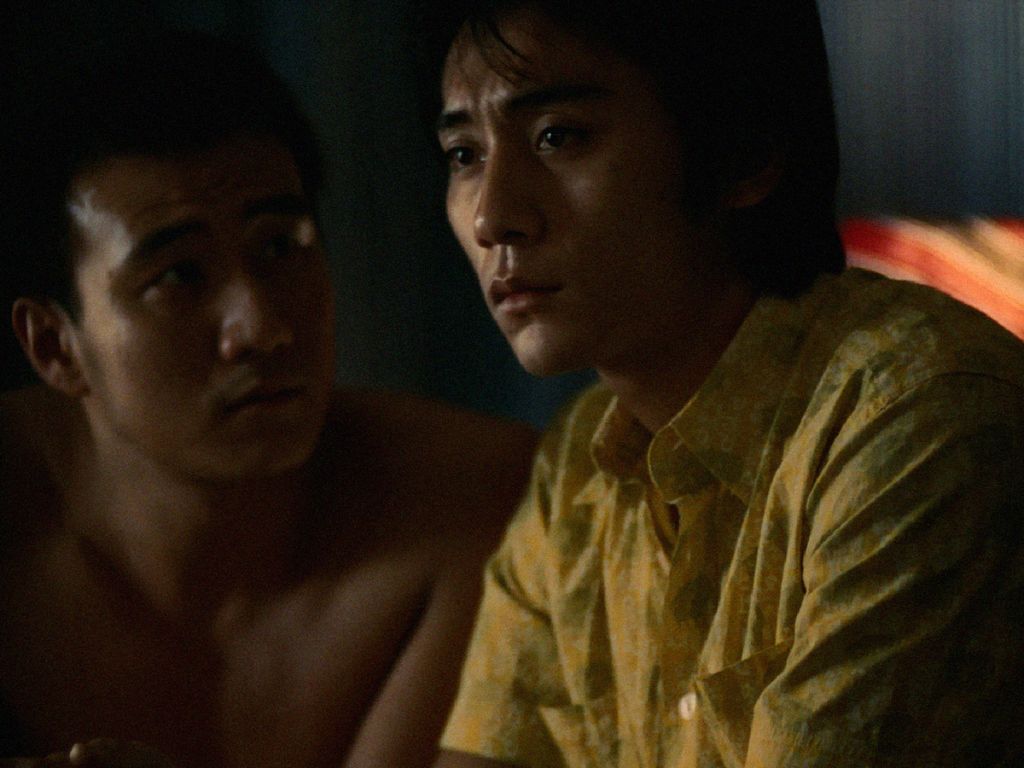 Image still from Lan Yu (2001, Stanley Kwan)
In this Onsite Conversation, Hong Kong filmmaker Stanley Kwan sits down with film interviewer Ding Tian to reflect on his four-decade career and the creative decisions behind some of his most celebrated films, including Rouge (1987), Center Stage (1991) and Lan Yu (2001).
From his collaborations with actors Tony Leung and Anita Mui to his creative exchanges with art director and editor William Chang, Kwan revisits the people and experiences that have shaped his filmmaking practice. The conversation also explores his approach to translating literary works for the screen, the relationship between a director and their characters, and how personal experiences find their way into his films.
This interview is conducted in Mandarin with English subtitles.
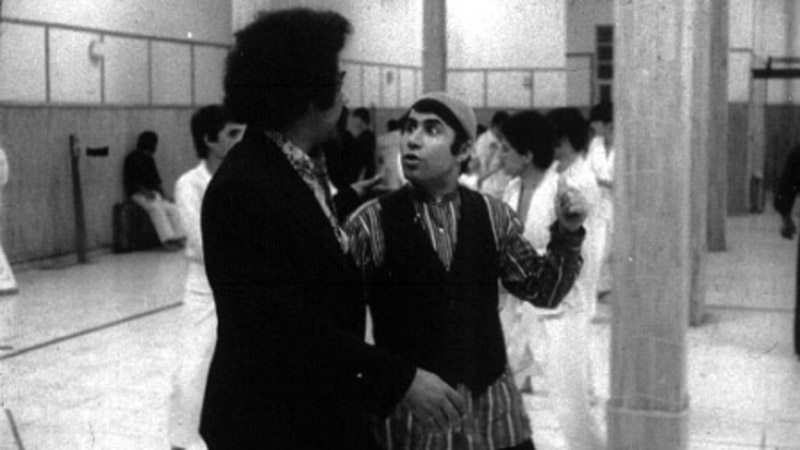
Hosts of the Cinema Rex podcast, Kaveh Mohebbi and Faran Moradi, are joined by actor Behtash Fazlali to discuss Samad in the Way of the Dragon (1977), an Iranian martial arts comedy inspired by the international popularity of Bruce Lee.
Created and portrayed by Iranian actor and director Parviz Sayyad, Samad is a bumbling country boy who became a popular figure in Iranian television and cinema. The conversation revisits the character’s cultural legacy, exploring how Samad and the characters surrounding him reflected Iranian society in the years leading up to the 1979 Revolution, as well as broader aspects of Iranian everyday life.
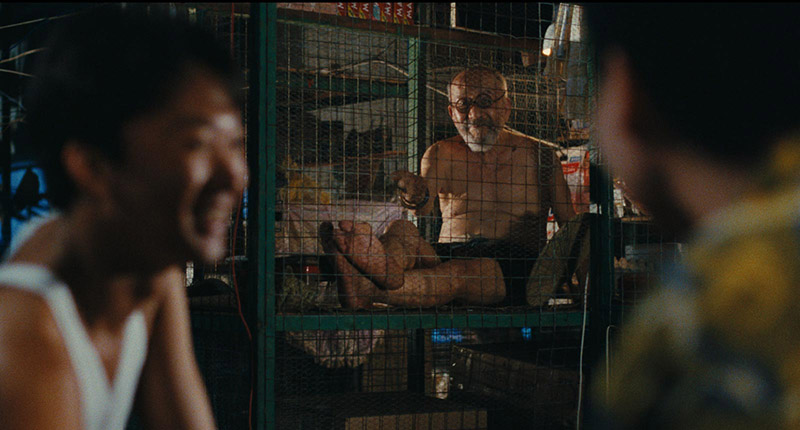 Image still from Cageman (1992, Jacob Cheung)
M+ Curator-at-large and film critic Li Cheuk-to examines the rise of Hong Kong New Wave cinema and the generation of filmmakers who challenged established filmmaking conventions from the late 1970s onwards.
Looking at the works of filmmakers including Tsui Hark, Ann Hui, Patrick Tam and Allen Fong, many of whom emerged from television, Li considers how the movement developed beyond its early experimental impulses to become increasingly intertwined with mainstream cinema. He also discusses the Second Wave, which brought together filmmakers from more diverse backgrounds, including Mabel Cheung, Stanley Kwan, Clara Law and Jacob Cheung. Across both generations, Li traces how the New Wave not only transformed Hong Kong’s cinematic landscape but also captured the city’s shifting social and political realities.
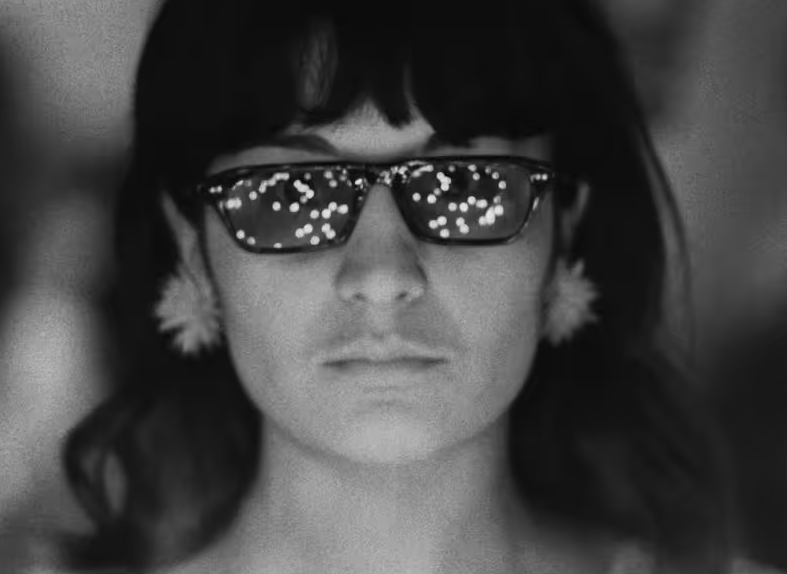
Scholar Daniel Schwartz and artist-filmmaker Armand Yervant Tufenkian examine Armenian filmmaker Artavazd Peleshyan’s theory of “distance montage”. Departing from conventional Soviet montage theory, which emphasised connections between successive images, Peleshyan sought to create connections between images distanced throughout a film.
Surveying his extensive filmography, the writers examine how Peleshyan brought together images of people, animals and natural elements to explore ideas of community and collective life. Considering the tensions between these ideals and the realities of Soviet society, the writers delve into how concerns over nationalism and censorship shaped Peleshyan’s filmmaking.
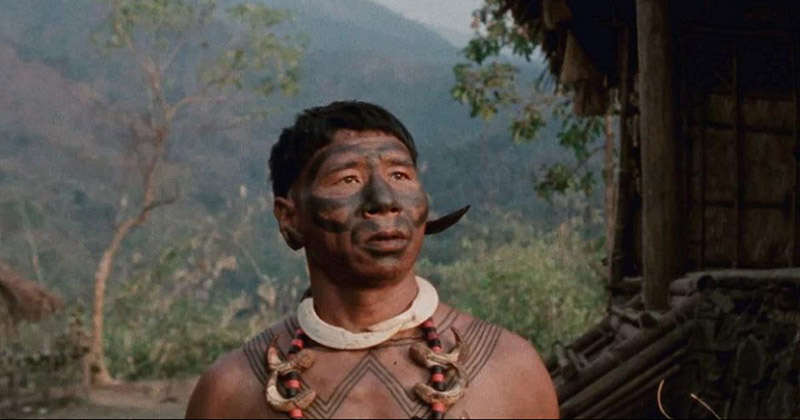 Image still from Angh (2026, Theja Rio)
Filmmaker Theja Rio, producer Nancy Nisa Beso and sales agent Gaurav Dhingra discuss the journey of Angh (2026), the first feature film from Nagaland, India, to win the Platform Prize at the Toronto International Film Festival. Set in 1962, the Konyak-language drama follows a village chief struggling to preserve his community’s traditions amid the spread of Christianity.
From Rio’s encounters with the Konyak community to the decision to shoot on 16mm, the conversation explores the film’s development and the challenges of filmmaking in a region with limited cinema infrastructure. The team also reflects on their plans to campaign for the Academy Award for Best International Feature Film, despite Angh not being India’s official submission.
Applications are open for Southeast Asian Film Exhibition & Programming Lab (SEAFEP LAB) 2026, a three-month professional development programme by Yogyakarta-based KDM Cinema for emerging film programmers, curators and cultural workers across Southeast Asia. Through online learning, mentorship and regional exchange, the lab invites participants to collaboratively develop a film programme, from curatorial research and film selection to audience engagement, which will eventually culminate in a pilot screening. The application guidelines can be found here, and the application form is available here. The submission deadline is 25 October 2026.
Submissions are open for the 49th edition of Cinéma du réel, a Paris-based documentary film festival showcasing works from around the globe, with an emphasis on the diverse forms and evolving practices of documentary filmmaking. Alongside its international and French competitions, the festival presents a selection of rare, heritage or contemporary works that explore the evolving possibilities of documentary cinema. The application guidelines can be found here, and the submission deadline is 1 November 2026.
Organised in cooperation with the Yamagata International Documentary Film Festival, the Yamagata Documentary Dojo returns for its eighth edition, offering Asian filmmakers a creative retreat to develop their documentary works-in-progress. Taking place from 5 February to 3 March 2027 in the mountainous hot spring village of Higori Onsen, Japan, the residency combines workshops and mentoring sessions with dedicated time for filmmakers to reflect on and develop their projects. The application guidelines can be found here, and the submission deadline is 2 November 2026.
Organised by artist-run platform Cinemovement, Cinemovement Lab VIII takes place from 14 to 22 December 2026 in Chiang Mai, Thailand, bringing together artists and filmmakers to explore experimental approaches to dance filmmaking and interdisciplinary collaboration. The Lab is seeking two international Writer Fellows, welcoming writers, critics, curators, journalists, programmers and publishers to reflect on creative processes and engage in conversations with fellow participants. The application guidelines can be found here, and the submission deadline is 5 November 2026.
This edition of the Asian Cinema Digest was compiled by Phyllis Chan. The Asian Cinema Digest is a monthly compilation of content taking place internationally involving Asian cinema and the moving image. Featured programmes are not representative of AFA’s views and are unaffiliated to the AFA unless otherwise stated.


