
This issue of the Asian Cinema Digest features subversive genre efforts across recent Asian arthouse and independent cinema. Check out the highlights of ongoing film festivals, current streamable titles and interviews with Amanda Nell Eu and Nelson Yeo.
We also spotlight two Indian arthouse filmmakers: actress Madhabi Mukherjee, whose films will be screening later this month and an interview with director Payal Kapadia, who has just won the Grand Prix at Cannes.
 Image still from Charulata (1964, Satyajit Ray)
Alongside the Goddess: Brave. Bold. Beautiful exhibition at the ArtScience Museum in Singapore, enjoy the magnifying screen presence of arthouse icon Madhabi Mukherjee across her three magnum opuses, screening from mid-July to early August. Most remembered for her collaborations with Satyajit Ray, Charulata (The Lonely Wife) (1964), Mahanagar (The Big City) (1963) and Kapurush (The Coward) (1965) display the grace and power of Indian women from three vastly different walks of life.
Image still from 2 Lizards (2020, Meriem Bennani, Orian Bakri)
 Image still from 2 Lizards (2020, Meriem Bennani)
In her offbeat yet slick and confrontational way, Meriem Bennani’s timely dissections of biotechnology, sci-fi futurism and dystopia are refreshing. Two of her short films, Ghariba (2017), 2 Lizards (2020) and a feature in three parts, Life on the Caps (2022) are available to stream on Shasha Movies, an independent platform for South-West Asian and North African (SWANA) cinema.
2 Lizards (2020), co-created by Bennani and Orian Bakri is a compiled version of their eight-episode computer-animated satire series on quarantine life and its hilariously horrifying quirks.
 Image still from FAQ (2023, Kim Damin)
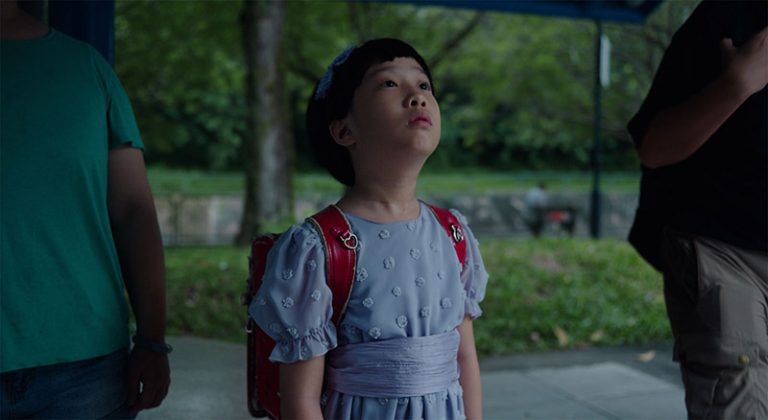
From 18 July to 4 August, niche genre picks will be screening and competing in the Fantasia Film Festival in Quebec, Canada, including a plethora of Asian picks. Some highlights of innovative genre-mashing pieces are Yoon Eun-kyung’s multi-award winning city housing horror The Tenants (2023), Kim Damin’s surreal satire FAQ (2023) surrounding a girl and her sentient bottle of makgeolli, Carl Joseph Papa’s sci-fi, fantasy and queer animation The Missing (2023), Adilkhan Yerzhanov’s newest deadpan western Steppenwolf (2024) and the long-awaited anime feature Mononoke the Movie: Phantom in the Rain (2024).
The festival’s classics section showcases three Hong Kong films including Tsui Hark’s A Chinese Ghost Story II (1990). In the Underground section, Neon Genesis Evangelion creator Hideaki Anno’s Love & Pop (1998), an experimental take on boredom, urbanity and coming-of-age in 90s Japan will be screened.

A great evening watch, Erma Fatima’s nostalgic tale of young love, ambition and naivete is available to stream on Netflix in Singapore. Set in 1965, the titular Jimi Asmara is a suave Malayan local singer who must face up to pressures of adopting the rising rock-and-roll style to solve his debts. At the same time, a melodious romance blooms between the rebel performer and his number one fan and longtime admirer, Noraini.

Sasha Han talks spunky girlhood, puffy sticker trading and kindred spirits with Amanda Nell Eu, director of coming-of-age horror Tiger Stripes (2023), where teenager Zaffan faces confusion and scorn after receiving her first period, and soon realises that she is gradually mutating into a tiger. Besides discussing her affinity for weird body horror and pulp aesthetics, Eu shared about deriving horror from social conformity and hysteria, as well as erroneous and harmful notions of menstruation as sexual adulthood.

Deep-diving into the process and inspirations for her sophomore drama All We Imagine as Light (2024), Payal Kapadia talks to Mubi Notebook’s Leonardo Goi about literary and familial influences and her visual and aural treatments of Mumbai city, its women and their authentic lives. For Kapadia, the process can be non-linear but centres discovery, sentiment, and the poetic that can arise from mundane objects or gestures, such as texting or beholding a rice cooker.
 Image still from Chime (2024, Kiyoshi Kurosawa)
Adam Nayman reviews Kiyoshi Kurosawa’s medium-length Chime (2024), in anticipation for the horror master’s two more slated releases this year, Cloud and a French-language remake of Serpent’s Path (1998). Nayman unravels the nodes that make up Kurosawa’s signature creepy atmosphere, with bleak mundanity, narrative silence, abstract cosmic questionings, amongst other creative flairs that compose a perfectly intangible sense of violence. A beautiful fear of the unknown.

Mostly known for the outlandish vibrance of Hausu (1977), Nobuhiko Obayashi’s newly restored cross-cultural slice-of-life drama Beijing Watermelon (1989) seems rather out of character. Matt Turner argues that for all of Obayashi’s poppy reputation, his cinema is better characterised by a sentimental and optimistic humanism. Uncovering overlaps between the film’s narrative and production history, Turner concludes on strong themes of friendship and empathy that underlie the experimental filmmaker’s work.
Following the end of the Flaherty Film Seminar 2024: To Commune, hosted at the Thai Film Archive, The Film Comment Podcast invited curators Julian Ross and May Adadol Ingawanij, the archive’s deputy director Kong Rithdee and filmmaker Anocha Suwichakornpong to share a wrap-up. The guests explored provoking interpretations of solidarity and community, shaping conversations to decenter the sole artist’s position, expanding representations of Thai arthouse cinema and encountering developments across the six day event.
Nelson Yeo and the Chapalang Film Podcast hosts unpack the directorial process: its idiosyncrasies, supposed formulas and infinite possibilities. Tracking Yeo’s unconventional methods of arthouse filmmaking from prolific shorts to his directorial debut Dreaming & Dying (2023), filmmakers Jonathan Choo and Say Peng weigh in to ponder various parts of the production process: inspirations, scriptwriting, developing styles, working with actors, creating a comfortable film set and more.
The Jogja-NETPAC Asian Film Festival 2024 is accepting submissions of features above 45 minutes and shorts 45 minutes or less, that were not made before January 2023. The deadline for submissions is 31 July 2024.
Submissions for shorts have closed, but the 26th Bucheon International Animation Festival is still accepting feature films above 40 minutes completed after 1 January 2023. The deadline for submissions is 31 July 2024.
Call for entries to the 35th Singapore International Film Festival is open for Asian feature films above 60 minutes and Southeast Asian short films below 30 minutes until 25 July 2024.
This edition of the Asian Cinema Digest was compiled by Renee Ng. The Asian Cinema Digest is a monthly compilation of content taking place internationally involving Asian cinema and the moving image. Featured programmes are not representative of AFA’s views and are unaffiliated to the AFA unless otherwise stated.


