
My first encounter with the Asian Film Archive (AFA) was completely serendipitous.
When I was at the Cannes Film Festival in 2022, I was able to catch a screening of Mike de Leon’s Itim, as part of the Cannes Classics selection. Having seen many older films before, it was not my first time watching one with a ‘restored’ label. The magic of film restoration did not fully dawn on me until I watched Itim though. I was dumbfounded by the beauty of the restoration carried out by the film restoration laboratory, L’Immagine Ritrovata, as the version that I watched a long time ago was blotchy and was of very low-quality. I found that the restoration had maintained the atmosphere and visual signature of the film while elevating the technical ingenuity of the camerawork.

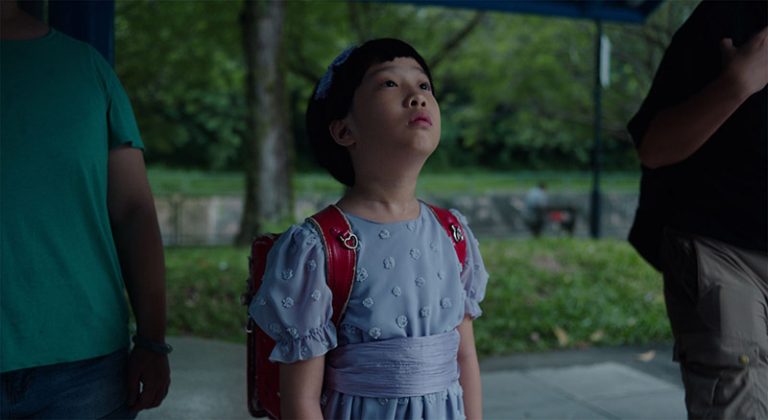
 Image stills from Itim (1976, Mike de Leon)
This screening of Itim, and the entire Cannes Classics programme, opened me up to the world of moving image heritage. It reminded me of what my secondary school history teacher emphasised on the importance of learning about the past, that history is crucial to navigating the present and future. Beyond the familiar genre conventions, Itim echoes this sentiment as an allegory of the haunting effects of historical trauma and the far-reaching consequences of its repression on those living in the present.
Since watching Itim, I started looking into ways I can contribute to maintaining the cinema heritage in my homeland. As a relatively young country, Singapore does not have as bountiful a cinematic output as countries like France. This does not discount the vibrant and diverse set of films that have defined the young nation-state, which I have come to realise after learning about the work of the Asian Film Archive (AFA). Thanks to Cannes, Itim connected me to AFA through the Mike de Leon retrospective that AFA organised in April 2023. I joined the AFA as a volunteer and started following their programmes and offerings. It opened my eyes to the depth and diversity of local and regional film history and heritage that I got to explore more throughout my tenure as a Collections intern.
While the AFA’s aims of restoring and preserving Asian films may be self-evident, what is not as obvious is the collection’s pivotal role as a repository of Singapore and Asia’s film culture of the past and present. During my time at AFA, I parsed through donations of old film magazines, handbills, posters and scripts. What surprised me was the existence of a vibrant and longstanding film-going culture that this tiny island had borne witness to since its emergence as a bustling and modern colonial port.
 Image of a film magazine from the 1970s, as part of AFA’s film memorabilia collection
From the country’s first film screening in 1907 (Uhde & Uhde, 2010), film culture in Singapore has steadily accumulated and evolved, developed by film enthusiasts and capitalists banking on the burgeoning profitability of film distribution and exhibition. It is a comforting thought that despite numerous threats seized upon films throughout the decades (ie the introduction of television in the 1950s and more recently, the increasing reliance on A.I. for cultural production), remnants of this culture live on through the AFA’s collection as blueprints of something tangible from an ephemeral and affective experience.
Looking at the film posters and handbills in the AFA’s collection, you will notice faded ink stamps at the corners of the brittle pages. Apart from the aged quality of the materials, these stamps locate different film subcultures to theatres with diverse symbolic status. These theatres, like the Alhambra, the Rex, the Capitol, and the Odeon, have long been demolished as part of urban development, but they live on through these handbills as cultural and historical landmarks that ushered in a brand-new era of moviegoing for Singapore citizens. Unlike the nondescript multiplex chains that are located in shopping malls across Singapore today, these theatres had a single-hall and assumed a distinct identity: the Alhambra and Capitol screened English titles and were thus status symbols, while the Majestic was known to feature more Cantonese films and also functioned as a Cantonese opera house. While processing the handbills for the collection, I became envious of the fact that some of my ancestors were able to watch some of my favourite films, like Ernst Lubitsch’s The Shop Around The Corner (1940) and Tsui Hark’s Peking Opera Blues (1986), on the big screen.
 Image of a handbill for The Shop Around The Corner (1940, Ernst Lubitsch)
 Image of a handbill for Peking Opera Blues (1986, Tsui Hark)
I was fortunate enough to access the archive’s collection of Cathay-Keris films for cataloguing. Going into the task I had low expectations, anticipating films with old-school politics and kitschy tones. While it might have been all of these things, the films I watched turned out to also be aesthetically experimental and subversive, marrying the easy entertainment of lowbrow art with the visual and narrative complexities of art cinema. Without the AFA’s conscious efforts in preserving such an integral part of Singapore’s cultural heritage, present and future audiences would not be able to experience the glory of the Golden Age of Singapore cinema. One of the first Cathay-Keris films I watched, Gurindam Jiwa (1966), exemplifies the prestige Hollywood melodrama made in the 1950s à la Douglas Sirk and George Stevens, particularly for the latter’s A Place in the Sun (1951), from which Gurindam Jiwa draws the most comparisons to. What I found refreshing in Gurindam Jiwa is not its re-hashed moral politics of class conflict but the ease in which director M. Amin oscillated between genres and wielded the acting chops of veterans Noordin Ahmad and Latifah Omar to create a luscious and emotionally devastating chamber drama. Unlike most films made in that era, the characters embodied everlasting depth and complexity without ever veering into the maudlin. I will soon discover more works featuring Ahmad and Omar, but Gurindam Jiwa is to me the brightest showcase of their dramatic talents.
 Image still from Gurindam Jiwa (1965, M. Amin)
As I catalogued more films from the Cathay-Keris Malay Classics Collection, I noticed that the big stars of the studio were typically type-casted into certain characters: Noordin Ahmad as the conflicted and (sometimes self-)righteous underdog, Rose Yatimah as the deceptively innocent ingénue and Mahmud June as the scheming and conservative elder. Mat Sentol and Wahid Satay alternate as the bumbling and mischievous man-child whose films were typically vehicles for them to display their innovative and absurd physical comedy. Among this coterie of actors, I was most drawn to Siput Sarawak and her expressive and unpredictable visage. Like Siti Tanjung Perak in some of her roles, she typically took on complex and oftentimes unsympathetic characters, humanising and complicating the female villain archetype in her films. Her performance in Siti Zubaidah is one of the most deliciously vicious I have ever seen, as my mind keeps going back to Bette Davis’ character in What Ever Happened to Baby Jane? (1962) whenever Sarawak was on screen.

 Image still from Siti Zubaidah (1961, B.N. Rao)
Accessing the Cathay-Keris films through the AFA has been an eye-opening experience. Its position in an archive locates Singapore cinema within the context of regional heritage, which is reinforced by its inclusion into the UNESCO Memory of the World (MOW) Asia-Pacific Regional Register. Seeing that these films are a significant part of local film history, I am disheartened but unsurprised that most Singaporeans my age have not watched, or are unaware, of these films. It highlights the importance of the ‘access’ aspect of AFA’s mission, which is an enduring and ever-evolving task, especially with the ubiquity of online streaming nowadays.
Overall, it was a pleasure getting to know the ins and outs of a small and independent film archive. It forced me to rethink the prejudices I may have harboured against local cinema, but also transformed my outlook on films in general. As an avid Gen-Z cinephile, I have become accustomed to the passive and banal ways of accessing films, mostly on the internet. Stepping foot into an archive and physically handling a reel of film has undeniably altered my perception of film, not merely as content/entertainment, but also as a material asset and artefact. Just like watching Brakhage’s Mothlight (1963) for the first time, the films in my mind’s eye have now become richer and more present in tangible reality. I would like to extend my sincere gratitude for the guidance from the AFA Collections team, Tee Pao and Jia Ling, as well as the entire AFA team for their warm welcome.

Bibliography
Uhde, J., & Uhde, Y. N. (2010). Latent Images: Film in Singapore. Ridge Books.


