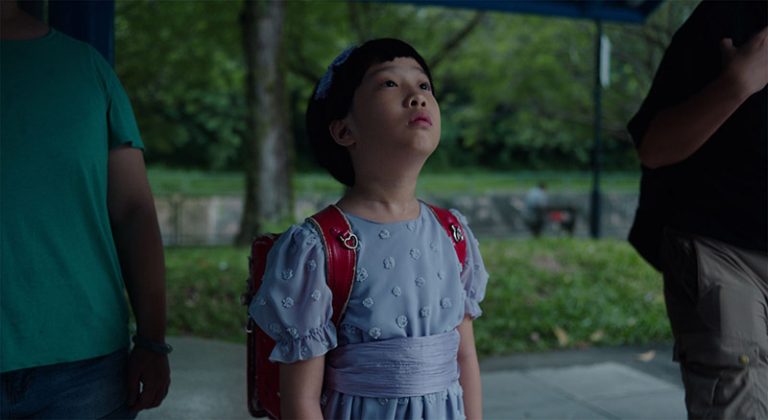

May 2025
This issue of the Asian Cinema Digest focuses on Asian auteurs, showcasing films by Jia Zhangke and Mikio Naruse, and writings by Satyajit Ray and Yeo Siew Hua. Delve deeper into the works of Iranian cinema icons Abbas Kiarostami and Fatemeh Motamed-Arya, and explore the curious world of children’s filmmaking.
 Image still from Unknown Pleasures (2002, Jia Zhangke)
In case you missed the Jia Zhangke mini-retrospective at Asian Film Archive, Criterion Channel offers a selection of 10 features and 2 shorts from the Chinese auteur’s oeuvre. Jia’s rich filmography chronicles China’s rapid modernisation in wake of the Great Leap Forward policies, while remaining deeply critical of the effects of rapid modernisation and disillusionment faced by the country’s youth. Criterion Channel’s line-up includes Jia’s debut feature Xiaowu (1997) along with other acclaimed works, Platform (2000), Unknown Pleasures (2002) and The World (2004). Available for screening now.
 Image still from The Little Girl of Hanoi (1974, Hai Ninh)
On the fiftieth anniversary of the fall of Saigon, filmmaker and program curator Tony Bui presents a multiperspective look at the Vietnam War on film. The programme features influential films focusing on the experience of American soldiers including Platoon (1986) and Full Metal Jacket (1987), while exploring Vietnamese perspectives through powerful dramas such as The Little Girl of Hanoi (1974) and When the Tenth Month Comes (1984). Three Seasons (1999) has Bui’s own poetic reflections on Vietnam in the past and present, reconciling the multitude of experiences that shape and shift the understanding of the conflict. Now screening on Criterion Channel.
 Image still from When A Woman Ascends the Stairs (1960, Mikio Naruse)
Japan Society and Metrograph co-present a career-spanning retrospective honouring Japanese auteur Mikio Naruse. The first part hosted at Japan Society runs from May 9 – 31, while the latter part opens at Metrograph from June 5 – 29. Naruse, often cited as the “fourth great master” of Japanese cinema, focused his understated dramas on the personal and collective histories of the common people- women and the working class milieu- amidst Japan’s ruthlessly gendered and rapidly modernising society. The thirty-film, 35mm print-packed lineup includes titles such as Wife! Be like a Rose! (1935), Floating Clouds (1955), When A Woman Ascends The Stairs (1960).
 Image still from Once Upon A Time, Cinema (1992, Mohsen Makhamalbaf)
The Institute of Contemporary Arts (London) presents an eight-film retrospective on Iranian actress Fatemeh Motamed-Arya from 14 May to 1 June. One of the most significant actresses in post-revolutionary Iranian cinema, Motamed-Arya’s decades-long career is testament to her artistry and activism. Celebrated for her versatility and penchant for playing strong-willed characters, the retrospective spotlights her performances in films including Mohsen Makhmalbaf’s surreal comedy Once Upon A Time, Cinema (1992) and Bahram Tavakoli’s poignant drama, Here Without Me (2010), which is based on The Glass Menagerie by Tennessee Williams.
 Image still from Here We Are (1992, Chanasorn Chaikittiporn)
As part of the Avant Garde Film Festival at M+ Hong Kong, Reactivating Histories brings together a dynamic series of speculative moving image works which demonstrate the moving image’s capacity to preserve, document, and reactivate cultural objects. The films appropriate archival materials, reframing collective histories through the filmmaker’s personal perspectives to reflect the complex constructions of national identities in post-colonial Asia. Highlights of the programme include Chanasorn Chaikittiporn’s Here We Are (2023), Tan Pin Pin’s 9th August (2006), and Timoteus Anggawan Kusno’s Dear Shadow, My Old Friend (2023).

Hosts of Chapalang Film Podcast, Say Peng and Jonathan Choo, speak to Singaporean producer and General Manager of Singapore International Film Festival (SGIFF), Jeremy Chua. In this deep dive episode, Chua traces his initial passion for cinema and creative projects including A Yellow Bird (2016), Last Shadow at First Light (2023), and Tomorrow is a Long Time (2023). Drawing on his experience of producing, programming, and organising for SGIFF, he dishes some hard truths about making a living as a creative and the state of arthouse films today.

e-flux Notes publishes “Film Making”, written by Bengali film director Satyajit Ray in 1965. The essay offers the filmmaker’s personal reflections on the challenges of his early productions including rural drama Pather Panchali (1955) and internationally acclaimed title The Music Room (1958). Ray’s writing circles the central theme of striking a balance between means and ends in his filmmaking within the context of the Bengali film industry in the fifties and sixties. Skillfully weaving together personal anecdotes and observations on local and global cinema, Ray’s essay captures a snapshot of his own filmmaking practice during a period of prolific creativity and robust humanism.
 Image still from Hausu (1977, Nobuhiko Obayashi)
Writing for Mubi Notebook, Sophia Satchell-Baeza rounds up notable films made by children throughout history. This includes the psychedelic haunted-house horror Hausu (1977) and Love You Baba (2014) by Nepalese filmmaker Saugat Bista, who currently holds the Guiness World Record as the youngest director of a professionally made feature film. Inspired by the feature film Children Make Movies (1961), Satchell-Baeza examines technologies that have made filmmaking accessible to young auteurs, the precocity and impulses which drive their creations, and questions the pedestalisation of childlike innocence and imagination in filmmaking.
 Image still from The Wind Will Carry Us (1999, Abbas Kiarostami)
Writer and poet Kaveh Akbar reflects on Iranian New Wave director Abbas Kiarostami’s The Wind Will Carry Us (1999). The film follows an unnamed documentarian awaiting an old woman’s death to complete his assignment of capturing her death rites. Akbar’s poetic and contemplative piece, like Kiarostami’s film, deals in dichotomies and the absences in-between extremes— he attempts to untangle “the movie [Kiarostami] has made, [which] coexists with the one we create by watching”. Reconciling his own experiences growing up within Iranian society and the pastoral scenes represented on-screen, Akbar draws out the film’s banal manifestations of good and evil and the blurred lines between art (poetry, filmmaking) and reality.
 Image still from April (2024, Dea Kulumbegashvili)
Le Cinéma Club speaks to filmmaker Dea Kulumbegashvili about her latest feature, April (2024). Kulumbegashvili’s boundary pushing work follows a seasoned obstetrician (Ia Sukhitashvili) working in the remote Georgian countryside— her career hangs in the balance as she faces a workplace investigation and rumours of her performing illegal abortions. Kulumbegashvili speaks about the creative process with Sukhitashvili as well as cinematographer Arseni Khachaturan, guided by mutual trust and understanding. Kulumbegashvili stresses the importance of tenacity in filmmaking and shares about her inspirations and hopes for the future of Georgian cinema.
 Image still from A Land Imagined (2018, Yeo Siew Hua)
Film Comment reprints Singaporean director Yeo Siew Hua’s essay, which was first published in MARGIN- a print-only Southeast Asian film magazine based in Phnom Penh. Yeo’s essay details his reflections upon rewatching his film A Land Imagined (2018) several years after its release. Yeo looks back at the filming locations- cybercafé, migrant worker dormitories- observing that some of them are now gone, lost to the ever-shifting urban landscape in Singapore. Aptly titled after Arthur Yap’s 1971 poem, Yeo’s meditative piece presents a cyclical and mournful reminiscence of the country’s disappearing landmarks.
The Tokyo International Film Festival founded in 1985, is the only Japanese film festival accredited by the International Federation of Film Producers Associations (FIAPF). The festival accepts feature films (fiction, documentary, and animation) completed after January 1st, 2025. The application guidelines can be found here, and the deadline for early-bird submissions is 27 May 2025.
Founded in 1982, INTERFILM is the oldest and largest short film festival in Berlin which aims to create a space for films reflecting current social and political events. Submitted films will also be considered for INTERFILM’s partner festival, the 18th KUKI- Young Short Film Festival Berlin. The application guidelines can be found here, and the deadline for submissions is 28 May 2025.
The Uppsala Short Film festival has since become Sweden’s main arena for short film and is recognised by the Academy of Motion Picture Arts and Sciences, European Film Academy, and BAFTA. Recurring competition programmes include Fantastic Film, queer films, comedies, and really short shorts (maximum of 3 minutes). The application guidelines can be found here, and the deadline for submissions is 28 May 2025.
Back for its 39th edition, Cinekid Festival aims to entertain, connect, and contribute to the development of children into independent, conscious, and thoughtful citizens of the world. Cinekid is accepting short and feature films in the categories of Best Children’s Film Competition and Best International Short Film. The application guidelines can be found here, and the deadline for submissions is 1 June 2025.
The Hong Kong International Film Festival Society (HKIFFS) and Nowness Asia have formally launched the Asian Short Film Fund (ASFF), offering aspiring directors and producers across the region financial backing and industry mentorship. Completed shorts will premiere at the milestone 50th Hong Kong International Film Festival in 2026. The application guidelines can be found here, and the deadline for submissions is 15 June 2025.
Presented by *SCAPE, the Singapore Youth Film Festival (SYFF) serves as a national platform celebrating the achievements of exceptional young filmmakers while fostering a deeper appreciation for local films and filmmaking. SYFF extends its call for submissions in the Student and Open Youth Categories. The application guidelines can be found here, and the deadline for submissions is 27 July 2025.
This edition of the Asian Cinema Digest was compiled by Kuo Yi Quan. The Asian Cinema Digest is a monthly compilation of content taking place internationally involving Asian cinema and the moving image. Featured programmes are not representative of AFA’s views and are unaffiliated to the AFA unless otherwise stated.


